
Smoke
Smoke and soot restoration in Fort Worth
Soot is not a burned room. It is residue on walls, contents, attic, and HVAC. We clean what can be cleaned and replace what cannot.
A small kitchen fire can load the whole house if the air handler kept running. Walls look fine in photos and wipe gray on a glove. That is soot, not dirt.
We do not fog a smell and paint. Source first, then clean or replace, then seal only where the material is sound. If the fire also wet the house, that is a drying job too.
01
Find it
Rooms, ceilings, contents, attic, and the HVAC. Synthetic-material fires leave a different residue than a grease fire.
02
Clean or replace
Hard surfaces often clean. Porous materials, insulation, and some cabinetry do not. We document the difference.
03
Odor
Odor lives in the residue and the cavity. Remove the source. Sealing a dirty surface traps it.
Smoke work includes
- Wall and ceiling deposition
- Cabinetry and contents
- Attic contamination
- Duct and HVAC considerations
- Limitations of encapsulation
- Reconstruction after cleaning, if finishes came out
What soot does to a house
Soot is a fine residue that settles on every surface and gets into porous ones. A grease fire leaves a sticky film. A fire that burned plastics, carpet or foam leaves something drier and harder to lift. We test a small area before deciding how to clean, because the wrong method can push soot deeper into paint or fabric.
Cooking fire? See how smoke and soot spread after a kitchen fire.
What we clean and what we replace
Hard surfaces like tile, metal, glass and sealed wood often clean. Insulation, unsealed drywall, carpet and pad, and some cabinet interiors usually do not. We write down which is which, with photos, so the scope matches what the house needs. Contents are sorted the same way: wipe and keep, or let go.
Air handler and ducts
If the system ran during or after the fire, smoke went wherever the air went. We check the returns, the supply registers and the air handler, and we note what needs cleaning or replacing.
Odor
Smell comes from residue in the surface and in the cavity behind it. We remove the source first. Sealing over dirty surfaces holds the smell in. Sealer goes on only after the material is clean and sound.
If the fire also wet the house
Fire hoses and sprinklers put water in walls and floors. That is a drying job too, and we plan both together so one does not undo the other.
Before we get there
- Leave the HVAC off until someone has looked at it.
- Do not wipe walls or ceilings. Wiping smears soot.
- Take photos of every room before anything is moved.
- Keep a short list of what is damaged. Do not throw things out yet.
- Wait for the fire department to say the house is safe to enter. Ready.gov has the basics.
Questions
- Can HVAC spread soot?
- Yes. If the HVAC operated during or after the fire, the system should be evaluated for fire and smoke impact rather than assumed unaffected. Keep it off until a technician has looked at the equipment and the ducts.
- Can everything be cleaned?
- No. Some materials hold residue. Cleaning a surface that should have been removed is how odor comes back, so a technician decides what is cleaned and what is replaced, surface by surface.
- Can I clean smoke damage myself?
- Light residue on hard surfaces in one room, sometimes. Smoke that reached other rooms, fabric, insulation or the ducts is harder, and wiping soot with a wet cloth often smears it deeper. A technician chooses dry or wet cleaning for each surface. Call us if you are unsure.
- Why does soot smear when I wipe it?
- Many soot residues are fine and oily, so a wet cloth can push them into porous paint, drywall and fabric. Professionals usually start with dry methods and then match the cleaning to each surface instead of wiping everything the same way.
- Does smoke smell go away on its own?
- Not reliably. The smell comes from residue on surfaces and fabric, and opening windows helps the air but doesn't remove that residue. It has to be cleaned from the surfaces, the contents and the HVAC system, which is why airing out alone rarely finishes the job.
- Do the air ducts need cleaning after a fire?
- They need to be checked. Ducts carry smoke through the house, and soot can collect inside them. A technician decides whether cleaning is enough. Keep the system off until then so it doesn't spread residue to rooms that are still clean, and call us to have it looked at.
- Do you clean smoke damage from a neighbor's fire?
- Yes. Smoke can travel through shared walls, attics and vents into units that never burned. PRC cleans smoke damage in homes, condos and apartment units, and coordinates access with property managers and neighbors. You do not need to be the unit where the fire started. Call us.
- How soon should smoke cleanup start?
- As soon as the house is released. Soot left on surfaces is harder to remove over time, and smoke odor keeps spreading while the HVAC and contents stay untreated. There is no need to wait for an insurance visit to start protecting the house. Call us once the fire department clears the house.
Recent articles
All posts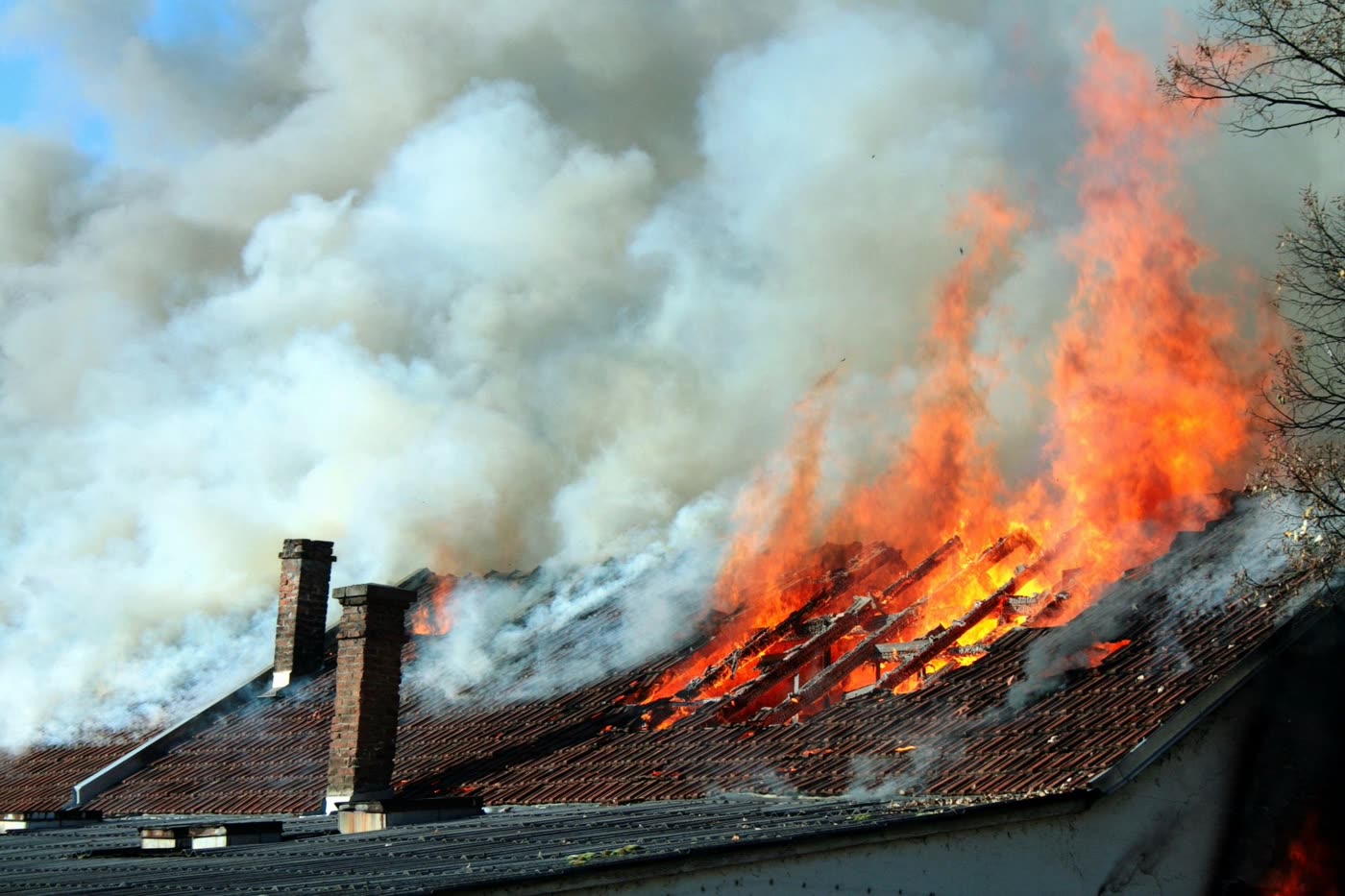
Feb 25, 2026
After a house fire in Fort Worth — board-up, document, then dry
Secure, document, dry. Smoke travels farther than flame.
After a house fire in Fort Worth — board-up, document, then dry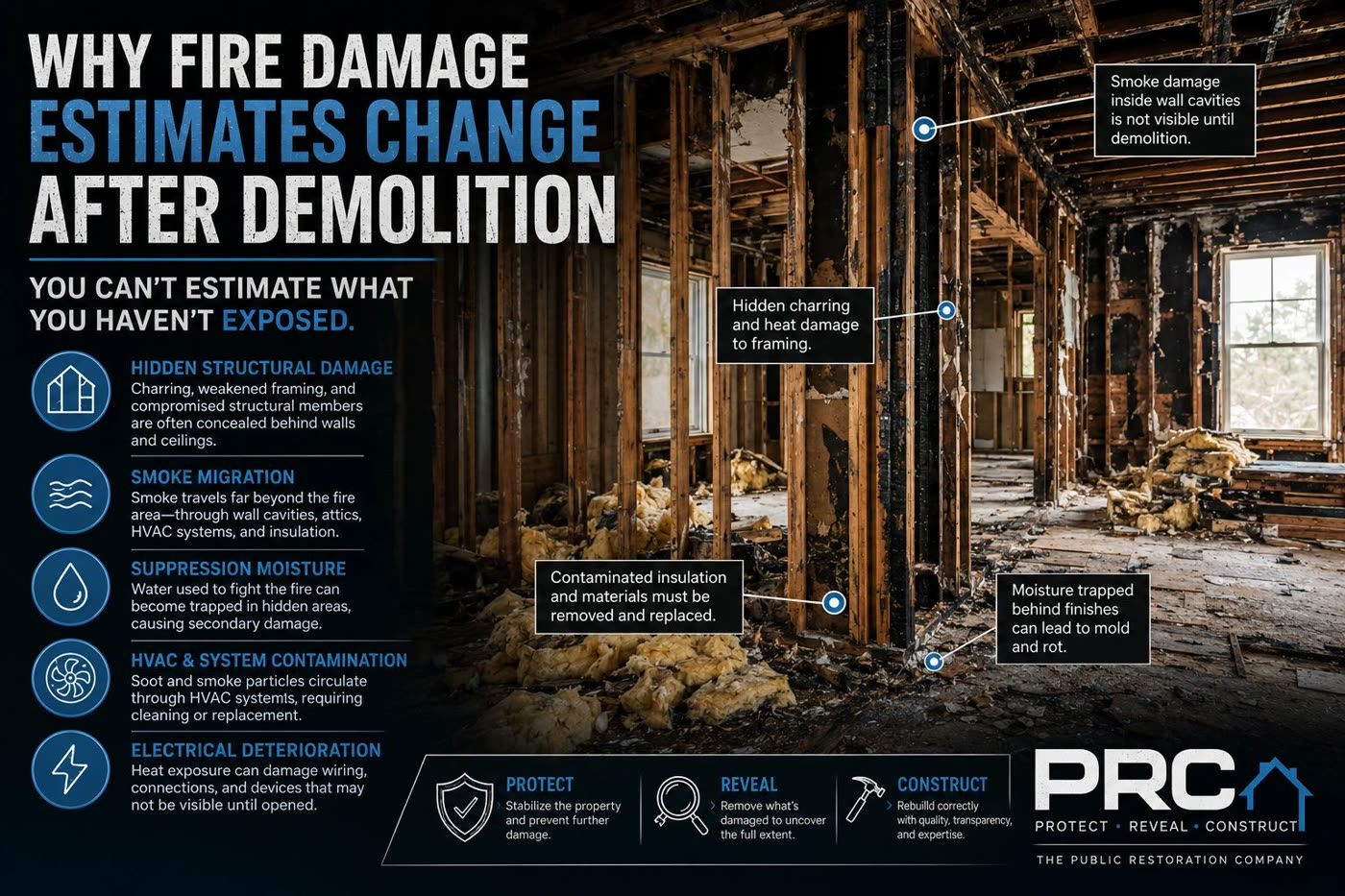
May 22, 2026
Why Fire Damage Estimates Change After Demolition
The Hidden Reality of Structural Discovery in Fire Restoration
Why Fire Damage Estimates Change After Demolition


Send details
Send photos and the address. We’ll call before we schedule a visit.
Water moving, fire just out, or roof open? Call us now.
Stable? Send details below. Answered 24/7.