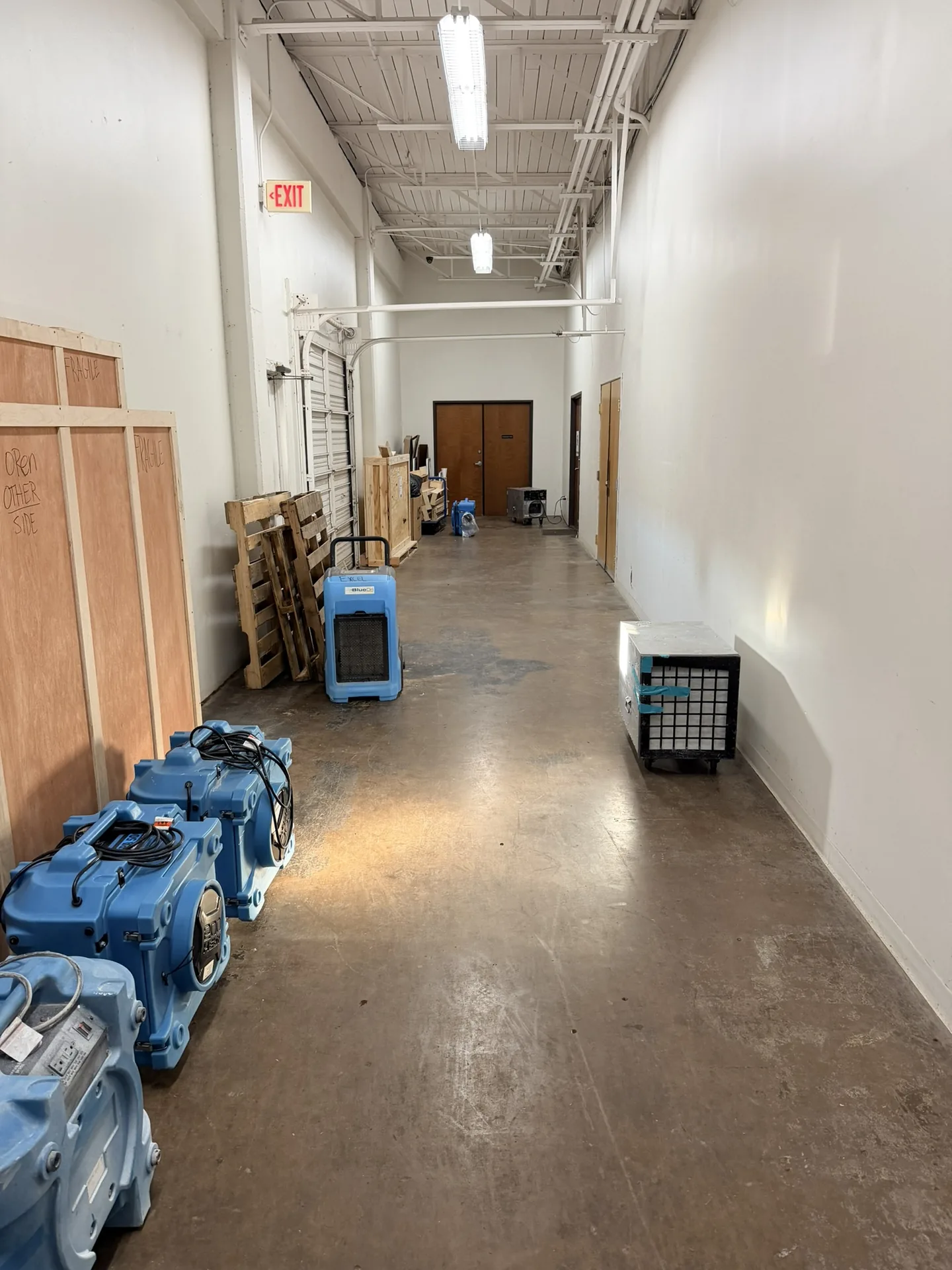
Healthcare and senior living restoration in Fort Worth
Fire, water, smoke, and rebuild work inside occupied assisted living, nursing, and healthcare buildings in Fort Worth / DFW — sequenced around residents and staff, with a file the administrator can stand on.
Independent contractor · Occupied containment · Measured drying · Documented scope · We don’t settle claims
How does restoration work in a senior living or nursing facility?
In an occupied senior living or nursing facility, restoration starts with stopping the source and protecting residents. The work zone is contained, moisture is mapped, and drying runs in phases so usable areas stay open when the administrator’s plan allows. Every step is documented for ownership and the insurer. Call us 24/7.
Who we are
The Public Restoration Company (PRC) is a Fort Worth / DFW restoration contractor. We stabilize and restore after water, fire, and smoke losses inside occupied care buildings — assisted living, nursing, and similar healthcare properties — then rebuild finishes when the structure is dry and cleared for permanent repair.
We are not a public adjuster. We do not settle insurance claims. Facility ownership and management choose the restoration contractor. Preferred-vendor lists are optional in Texas — see program contractors, Texas Department of Insurance tips on getting your insurance claim paid, and bulletin B-0017-17.
Offices, retail, gyms, and multifamily sit on commercial restoration. This page is for care facilities that stay occupied while work runs.
Nursing homes, senior living, and healthcare properties in Fort Worth and Tarrant County
PRC restores healthcare properties in Fort Worth, across Tarrant County, and in nearby DFW cities. That includes nursing homes, assisted living and memory care communities, independent senior living, and other healthcare buildings where people live or receive care while the work goes on.
A pipe break in a senior living center isn’t the same job as a pipe break in an empty house. Residents may not be able to move quickly. Staff still have to pass meds, serve meals, and chart. Families call the front desk wanting to know what happened. The restoration plan has to fit around all of that, and it has to leave the administrator with a clear record of what was done.
What we do in an occupied facility
Restoration inside a care building is not a house remodel with louder trucks. Dust control, containment, egress, and the facility’s own infection-control and life-safety rules matter. PRC works inside the protocols the facility already runs. We do not invent medical infection-control standards for you.
Stabilize first
- Stop active water when safe; board-up and secure after fire when the building needs it — start at emergency.
- Map moisture and soot paths before ripping finishes.
- Protect resident corridors and adjacent wings that are still in use.
Contain and phase
- Soft containment and air management at the work zone; negative pressure when the facility requires it.
- Night and weekend swings when daytime operations cannot stop.
- Relocate rooms or wings only when the administrator directs it — not as a default “gut the floor” plan.
Dry and document
- Extraction, moisture mapping, and measured structural drying — see water damage restoration and structural drying. Daily readings, not “leave equipment and hope.”
- Fire and smoke path: board-up, soot assessment, HVAC check when smoke moved through returns — see fire damage restoration. Standards context: IICRC S500 (water) and IICRC S700 (fire and smoke).
- Photos, readings, and scope the facility can hand a surveyor, ownership, or carrier. Thin carrier scope? Virtual review.
Rebuild when ready
- Permanent repairs after the building is stable and dry enough for finishes — reconstruction.
- Real occupied jobs only on projects.
Storm / roof-to-attic path: storm damage restoration when hail or wind opens the envelope into a wing.
Working inside an occupied nursing home or senior living community
Before any wall gets opened, we walk the affected area with the person the facility puts in charge. That’s usually the administrator, the executive director, the director of nursing, or the maintenance director. Together we mark which rooms, halls, and shared spaces are affected, which ones have to stay in use, and how residents and staff will get around the work.
From there, the plan is built around the building’s day:
- Resident rooms first. We figure out which rooms can stay occupied, which residents the facility wants to move for now, and the order rooms will reopen. The facility makes every relocation call.
- Paths kept clear. Exits, fire doors, and the halls staff use to reach residents stay open. Equipment, hoses, and cords are routed so walkers and wheelchairs can still get by.
- Shared spaces planned around. Dining rooms, kitchens, nurses’ stations, and therapy rooms get scheduled around meals, med passes, and shift change.
- One point of contact. The facility gets one PRC contact and a short daily update, in whatever form the facility prefers, on what’s drying, what’s closed, and what reopens next.
If the facility has its own rules for contractors, such as sign-in, badges, or an infection control risk assessment for construction, we work inside those rules. We don’t write your infection-control policy, and we don’t ask you to bend it for our schedule.
Containment that keeps residents and staff away from the work
Containment is what lets a wing keep running while one section is torn open. It’s the part of the job that residents and staff notice most, so we treat it that way.
- Walls between the work and the residents. Plastic barriers with zip doors seal the work zone off from occupied halls and rooms.
- Air kept inside the work zone. We use air scrubbers and seal off nearby return vents so dust and odor don’t travel through the building’s air system. When the facility requires negative pressure, we set it up.
- Separate routes for debris. Wet drywall, flooring, and trash leave by a route that stays out of resident halls wherever the building allows.
- Floors protected. Walk-off mats and floor covering at the zip doors keep dust and water from being tracked into clean areas.
- Noise planned. Cutting, demolition, and other loud work get scheduled with the facility, away from meals and quiet hours when that’s possible.
- Clear signs. Work zones are signed so residents, visitors, and staff know where not to go.
After-hours response
Water and fire don’t wait for business hours, and neither do nursing homes. Our phone is answered 24/7, so call us any time. When the building’s schedule calls for it, drying checks, demolition, and rebuild work can run at night or on weekends so daytime care isn’t disrupted. We don’t promise an arrival time by the minute. When you call, you’ll get a real answer about when a crew can be there.
If anyone is hurt, or there’s active fire or smoke, call 911 first and follow the facility’s emergency plan.
Water, fire, and smoke losses in care buildings
Water damage in senior living centers and nursing homes
The water losses we see in care buildings are the same ones any large building has, just with more people affected. They include burst supply lines, failed water heaters, ice machine and kitchen leaks, fire sprinkler discharges, roof leaks after a storm, and overflowing toilets and showers in resident rooms. Water mitigation in a senior living center means stopping the source, pulling the standing water, mapping where it went, and drying the structure with daily moisture readings until each area reaches its dry standard. Details are on water damage restoration and structural drying. If the water came from a sewer line or a toilet backup, it’s Category 3 water and follows a separate process. See sewage and Category 3 cleanup.
Fire and smoke damage in nursing homes and healthcare facilities
Kitchen fires, dryer fires in the laundry, and electrical fires are the ones that tend to start in care buildings. Even a small fire can push smoke and soot down halls and through the building’s air system, well past the room where it started. We board up and secure the building if needed, track where the smoke traveled, clean soot from surfaces and the air system, deal with smoke odor in occupied areas, and then rebuild, including kitchens and laundry rooms. See fire damage restoration.
Storm damage to healthcare properties
Hail and wind can open a roof over an occupied wing. We tarp and secure the roof, dry the attic and the rooms below, and then rebuild. See storm damage restoration.
Who this page is for
- Administrators and directors of nursing / maintenance who need a wing or corridor restored without shutting the whole house.
- Ownership groups and regional ops coordinating one Fort Worth / DFW property (or a small portfolio) after a pipe break, appliance flood, fire, or smoke event.
- Facility insurance contacts who need a contractor the building chose — not a drive-by preferred list — with documentation that matches what happened on site.
Not this page: homeowner water paths (use /drying), office / retail / multifamily (use /commercial).
More reading: What care-facility administrators ask after a loss
How we run work around residents
| Need | How PRC handles it |
|---|---|
| Keep residents when safe | Contain the wet or smoke band; phase so usable areas stay open |
| Quiet / after-hours | Night and weekend drying when operations require it — no invented arrival promises |
| Life safety | Egress kept; life-safety systems respected; off-hour work when the building is occupied |
| Discretion | Confidential assessments for administrators and ownership — no resident scare copy |
| File quality | Photos + moisture readings + scope the facility can stand on |
Active water in an occupied wing, or people hurt / fire still active: call us first (and 911 for life safety). Form intake is a callback when the scene is stable — not crew dispatch.
Documentation facility managers can hand to ownership and the insurer
Administrators and regional managers have to answer to ownership, to corporate, and to the insurance carrier. The file we build is meant to answer their questions without another site visit:
- Dated photos of the damage before work starts, during demolition, and after drying
- A moisture map and daily drying readings for every affected room
- A room-by-room list of what was affected
- A line-item scope of what was removed and why
- A log of which areas were closed, and the date each one reopened
- Final readings showing each area reached its dry standard before rebuild
The facility owns that file, gets it in whatever form it prefers, and can share it with whoever needs it. It supports the facility’s claim. PRC is not a public adjuster and doesn’t negotiate or settle claims. If the carrier’s estimate looks thin next to what you’re seeing on site, we can review the estimate.
Proof
We show real project work, not stock “healthcare” photos as proof of jobs we didn’t do. Occupied interiors: furniture stays when the plan allows; extract, set air, keep the room usable — see occupied drying on projects. Corridor and wing sequencing belongs on the facility walk, not a brochure bed-count claim.


What clients say
★★★★★
“Great communication! Prompt service! Thank you, Nick! Highly recommend!”
— Ryan Hall · Google review
★★★★★
“My home had damage from a water leak that needed immediate attention. The Public Restoration Company responded promptly to assess the problem. I worked with Nick, who was kind, professional, and very patient in answering all of my questions.”
— Barbara Lucks · Google review
Who chooses the contractor
In Texas, the facility / ownership chooses the restoration contractor. A carrier preferred list is optional — not a requirement. PRC restores and documents. We do not settle the claim. We are not a public adjuster.
- How preferred / program lists work: /program-contractors
- TDI: getting your insurance claim paid · B-0017-17
- Thin estimate vs what you see on site: /review
FAQ
Can restoration happen while a senior living facility stays occupied?
When it is safe, yes. Containment, phasing, and after-hours drying are the point — so residents and staff keep usable areas when the administrator’s plan allows. Live ETA by phone, not a canned SLA.
How do you handle water mitigation in nursing / assisted living?
Stop active water when safe, map moisture, contain the work zone, then measured structural drying with daily readings. Details on /drying. Sewage / Category 3 is a different path — /sewage.
Who coordinates with facility management and insurance?
PRC coordinates scope and documentation with the facility contact you name. Ownership chooses the contractor. We document; we do not settle the claim. Preferred-list context: /program-contractors.
Do you handle fire and smoke in care buildings?
Yes — board-up, soot path, HVAC check when smoke moved, then rebuild when dry. See /fire and IICRC S700 context.
What does a nursing home or assisted living facility need from a restoration contractor?
Containment that keeps work zones separate from residents, drying that can be phased around care schedules, clear daily communication with the administrator, and documentation ownership and the insurer can use. Sewage or contaminated water needs its own process. PRC coordinates with the facility contact you name.
Can you work after hours or around resident schedules?
Yes, when it is safe. Phasing, after-hours drying, and moving work zones room by room are how occupied facilities keep operating. The schedule is set with the administrator, not by a canned timeline.
What documentation will ownership and the insurer receive?
Photos before and during work, moisture maps and daily drying readings, a line-item scope of what was removed and why, and a record of when each area reached its dry standard. That documentation supports the claim; PRC does not settle it.
Which parts of the DFW area do you serve for healthcare facilities?
PRC serves Fort Worth and Tarrant County and nearby DFW cities. Call us to confirm coverage for a specific facility address.
What should staff do in the first hour after a pipe break in a nursing home?
Make sure residents in the area are safe and move them if the facility’s plan calls for it. Shut off the water at the nearest valve if staff can do that safely. Keep people away from wet floors and from any ceiling that’s sagging. Turn off power to the wet area only if it can be done without stepping in water. Take photos, then call us. If there’s a fire, or anyone is hurt, call 911 first.
Do residents have to move out while the work is done?
Not always. Containment and phased drying often let residents stay in rooms outside the work zone. When rooms do have to close, the facility decides which residents move and where. We plan the work order so rooms reopen as soon as they’re dry and safe.
How do you keep dust, noise, and odor away from residents?
The work zone is sealed off with plastic barriers and zip doors. Air scrubbers run inside it, and nearby return vents are sealed so dust doesn’t travel through the building’s air system. Debris leaves by a route away from resident halls when the building allows. Loud work is scheduled with the facility, away from meals and quiet hours.
Do you handle smoke damage after a kitchen fire in a nursing home or senior living community?
Yes. We trace where the smoke traveled, clean soot from surfaces and the air system, treat smoke odor, and rebuild the kitchen and any other damaged areas when the building is ready. The work is phased with the facility so meal service can continue wherever it’s safe.
Are you a public adjuster for nursing homes or assisted living facilities?
No. PRC is a restoration contractor. We restore the building and document the damage, but we don’t negotiate or settle insurance claims. In Texas, the facility chooses its restoration contractor, even if the carrier suggests one from its preferred list.
Can the same company dry the building and do the rebuild?
Yes. PRC dries and documents the building first, then handles the permanent repairs once the structure is dry. That includes framing and structural repairs, drywall and finish work up to a Level 5 finish, ceilings, hardwood and other flooring, roof repair or replacement, and damaged kitchens and laundry rooms. The facility deals with one contractor from start to finish. See reconstruction.
Call 24/7 — active water, fire, or unsafe conditions in an occupied wing.
Emergency · Drying · Fire · Commercial · Program contractors · Review · Projects
Facility intake
Facility intake when the scene is stable: Name · Phone · Facility name / address · What happened (short) · Access notes (optional).
Water moving, fire just out, or roof open? Call us now.
Stable? Send details below. We call back within a few hours, or by the next morning.