
It's late September in North Texas. The AC is still running, and nobody wants to think about ice. That makes right now the best time to get your pipes ready, because the week a hard freeze shows up in the forecast is the worst time to start.
The National Weather Service puts the average first freeze at DFW on November 22. It has come much earlier than that: as early as October 22 on record, and as recently as October 31, 2019. Texas A&M AgriLife Extension recommends getting pipes ready in October or November and keeping those protections in place through March or April. They also point out that pipe wrap and heat tape tend to sell out once freeze warnings go up.
Here's a plain checklist you can knock out in one fall afternoon, plus what to do on the night of a freeze and what to do if a line splits anyway.
Why North Texas houses get caught off guard
Most homes around here were built to handle heat. A lot of plumbing runs through places that stay warm nine months a year and get cold fast when a norther comes through:
- Attics. Water lines that run over the ceiling, especially near soffits and gable vents where cold air gets in.
- Exterior walls. Kitchen and bathroom sinks on an outside wall, and laundry hookups on the garage side.
- Garages. Water heaters, softeners, and the lines that feed them.
- Outside. Hose bibs, irrigation backflow preventers, and pool equipment.
Wind makes all of this worse. AgriLife notes that direct wind speeds up freezing, so a line on the north side of the house or behind a vent is more exposed than one tucked into an interior wall. One overlooked line is all it takes.
Your fall walk-through: one afternoon, before the first cold snap
Grab a flashlight and go through the house in this order.
- Find your main water shutoff and make sure it turns. Most Fort Worth-area homes have a valve at the meter box near the street, and many also have a house-side valve in the garage, near the water heater, or where the line comes out of the slab. Turn it off and back on once so you know it works. Tag it so anyone in the house can find it in the dark.
- Disconnect and drain garden hoses. A hose left on the spigot traps water in the bib. Put an insulated cover on every outside faucet.
- Look at the irrigation backflow preventer. That's the brass assembly sticking out of the ground near the house. It's exposed and easy to crack. Insulate it or drain it the way your irrigation installer recommends.
- Check the attic. Look for water lines lying on top of the insulation instead of under it, or near vents. Pipe sleeves are simple to add while it's still mild up there.
- Check the garage. Wrap exposed lines to the water heater and any softener. Note any gaps around the garage door that let wind blow straight across the pipes.
- Make a list of "exterior wall" sinks. These are the cabinets you'll open on freeze nights. Write it down now so you're not guessing later.
- Ask your pool service about freeze protection if you have a pool. Pumps and exposed equipment need their own plan.
- Buy your supplies now. Faucet covers, pipe sleeves, and a roll of tape. Don't wait until the grocery store is out of bread and milk.
The night a hard freeze is forecast
When the forecast drops well below freezing overnight, especially with wind, run through this before bed:
- Open the cabinet doors under the sinks on your exterior-wall list so house heat can reach the pipes.
- Let a faucet drip on the lines most at risk. The American Red Cross and AgriLife both recommend a slow drip during long freezes, since moving water is harder to freeze.
- Keep the garage door closed.
- Keep the thermostat steady day and night. Don't set it way back to save a little on the bill.
- If you're traveling, leave the heat on and ask someone to check the house. If you'll be gone for a while, consider shutting off the main and draining the lines.
If a pipe freezes, or splits
A frozen pipe doesn't always leak right away. The ice can crack the line, and then it lets go once things thaw and pressure comes back. That's why a lot of burst pipes get found the day after a freeze, when temperatures climb back up.
If a faucet won't run, or only trickles, during a freeze:
- Leave that faucet open.
- Warm the pipe gently with a hair dryer or heating pad, working from the faucet end back toward the cold spot.
- Never use a torch or any open flame. AgriLife and the Red Cross are both clear on that one.
If water is coming out of a wall, a ceiling, or a cabinet:
- Shut off the main water at the valve you tagged in the fall.
- Stay away from wet electrical. If water is near outlets, fixtures, or the panel, turn off power to that area if you can do it safely. If you can't, keep out of that room.
- Call a plumber for the pipe itself.
- Take photos before anything gets moved. Our guide on documenting water damage before cleanup walks through what to capture.
- Get the drying started. The longer water sits in a wall or under flooring, the more material has to come out. Our first-night water damage guide covers the next few hours step by step.
What a split line leaves behind
A burst line inside a wall doesn't stay put. Water wicks up the drywall, runs along the bottom plate, and gets under baseboards, cabinets, and flooring, often well past the spot where you see it. The paint can look dry while the cavity behind it is still wet.
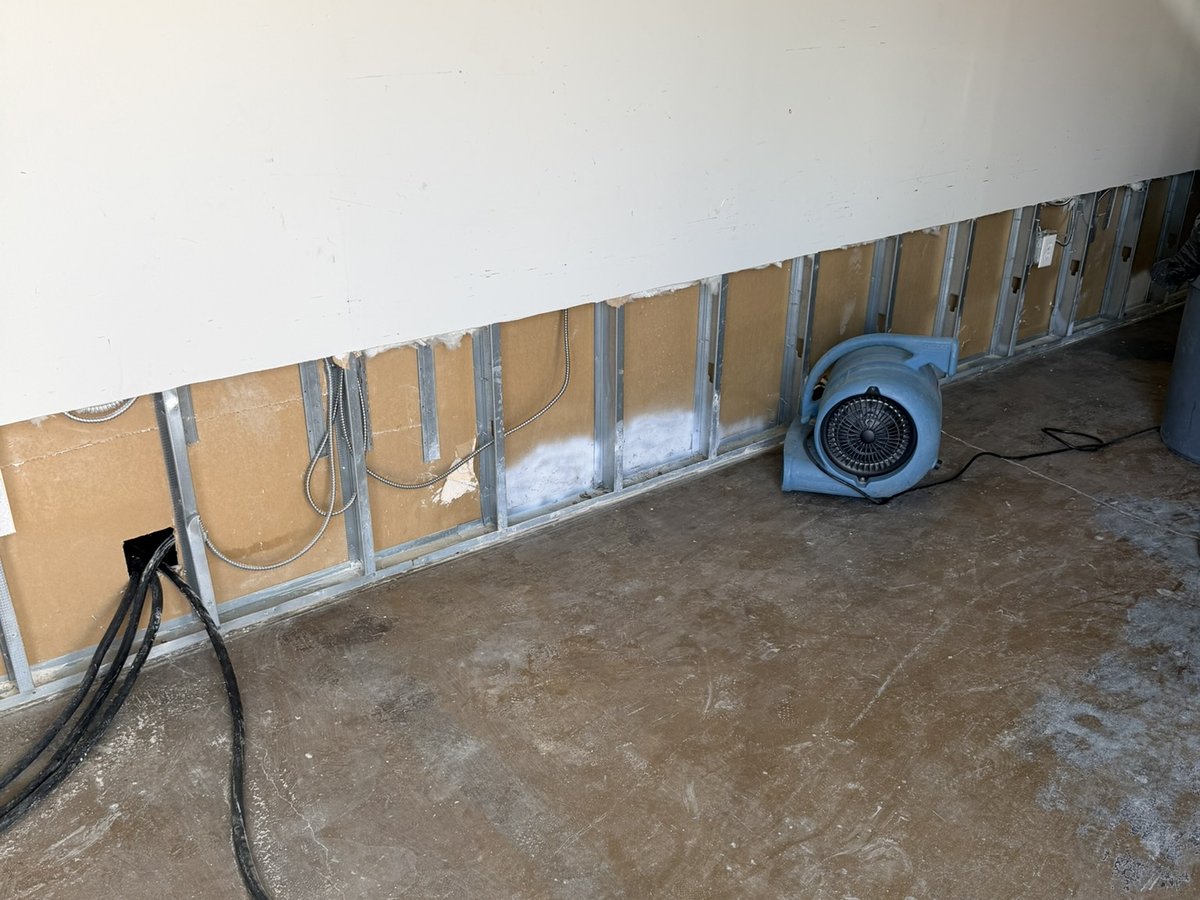
That's why we measure before we cut. On a typical water job, our crew uses moisture meters to map where the water actually went. We open the wall at the base only where the readings call for it, like the cut in the photo above, then set drying equipment to what the readings show and check again until the numbers come down. You can read more about how that works on our structural drying page. Once the structure is dry, the drywall goes back in at the cut line and gets finished, and the room goes back together.
The goal is to open as little as possible and still get the whole thing dry. Doing it right the first time is what keeps a burst pipe from turning into a second repair down the road.
Tape this inside your garage
- Main water shutoff: ______________________
- Sinks on exterior walls: ______________________
- Hose bib covers on? Hoses off? ☐
- Backflow preventer protected? ☐
- Attic and garage lines wrapped? ☐
- Plumber's number: ______________________
- The Public Restoration Company, water and drying: 817-632-2522, answered 24/7
A little work in October can save you a very long week in January. If a freeze does get the better of a pipe this winter, shut off the water, stay safe around electrical, and call.